

Pastoring the Flock of God
Impact on Pastors
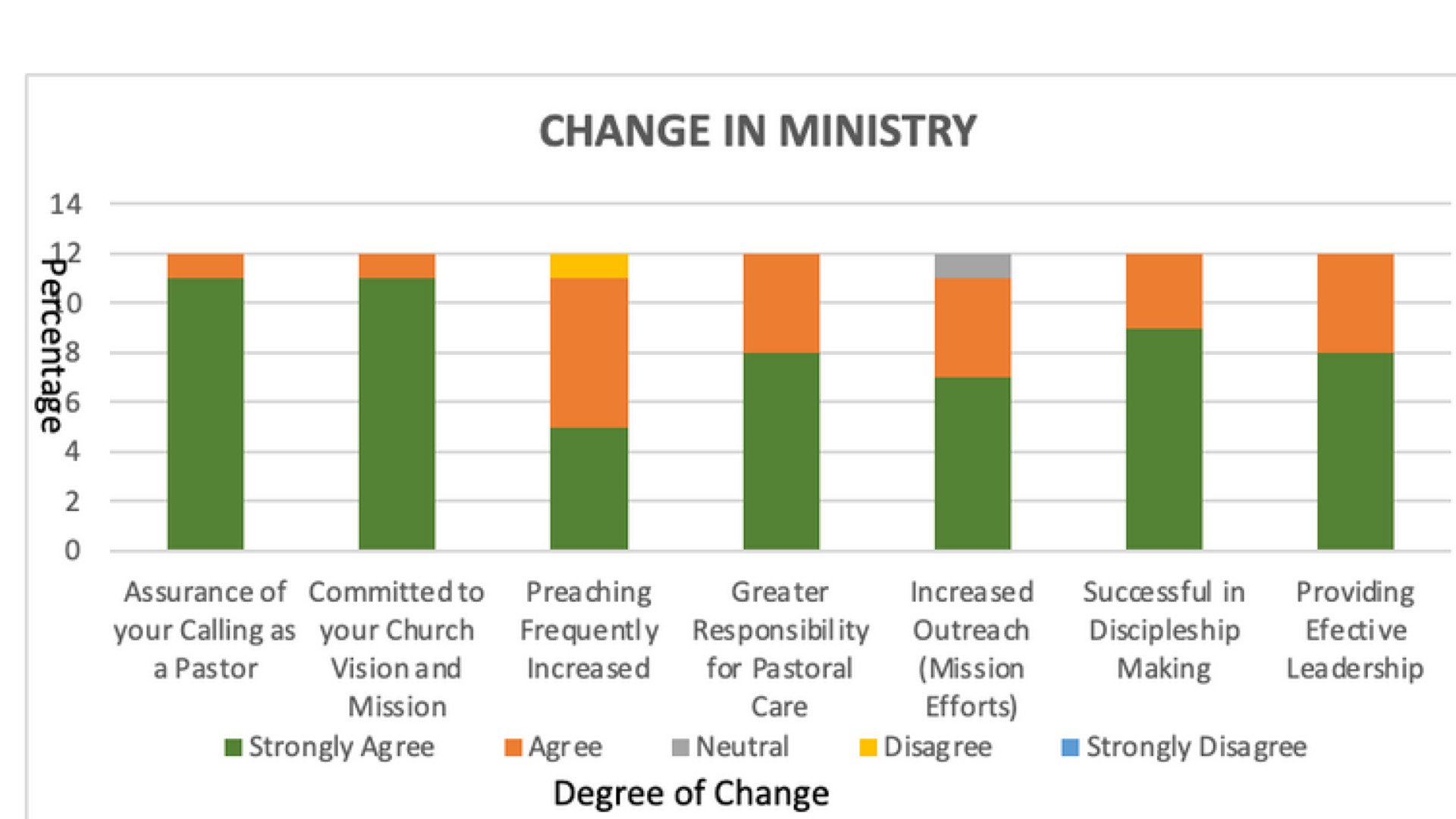
The investigation assessed respondents’ level of agreement after studying “Pastoring the Flock of God” (PTFG). Respondents indicated their level of agreement using five categories: strongly agree, agree, neutral, disagree, and strongly disagree.
The purpose was to identify the most significant changes in their lives and ministries after completing the training.
Highest-scoring area
The results showed that the highest-scoring area was “assurance of your calling as pastor and commitment to your church vision and mission.” This indicates that the training helped pastors develop a stronger understanding of their respective church visions and missions, while also gaining greater clarity and confidence in their pastoral calling.
Next highest-scoring area
The next highest-scoring area was “successful in discipleship making.” This suggests that PTFG helped spark a discipleship movement among participating pastors and provided a peer-learning model through which they could develop and benchmark their own discipleship initiatives.
Before participating in PTFG, some respondents indicated that they did not recognize the need for discipleship, while others viewed discipleship as something intended only for church members. The training broadened their understanding of discipleship and strengthened their engagement in developing discipleship practices within their churches.
PTFG also contributed to increased preaching engagement and effectiveness. The training strengthened pastors’ capacity to preach effectively and increased their burden and commitment to preaching. Support and interaction with other churches also created additional opportunities for pastors to preach beyond their own congregations.
The Cluster Model
The cluster model provided a wider platform for collaboration between churches, creating opportunities for pastors to learn from one another and participate in ministry beyond their individual churches.
The indicators “greater responsibility for pastoral care” and “providing effective leadership” also showed improvement. The training increased pastors’ understanding of their responsibility toward their congregations, resulting in increased pastoral care programs and more individual engagement with church members.
Overall
Overall, these changes helped address the tendency toward pastoral dominance and authoritarian leadership, encouraging pastors instead to take greater responsibility for caring for and serving their congregations.